How a habit forms
In a study that followed 96 volunteers for twelve weeks, each person picked one eating, drinking or activity behavior to repeat daily in the same context, such as "after breakfast," rating each day how automatic it felt [1]. Two findings carry over well to meditation.
- It takes a while, and it varies a lot. Among participants whose data fit the model, reaching 95% of their plateau of automaticity took anywhere from 18 to 254 days. Don't judge the habit at week two.
- One missed day didn't matter. In the authors' words, "missing one opportunity to perform the behaviour did not materially affect the habit formation process" [1].
Make it easy to start
- Same time, same place. Attach the session to something you already do every day: after the first coffee, before opening email, when you get home.
- A small minimum. Decide the smallest session that still counts (five minutes is fine) and keep it even on bad days.
- Fewer decisions. Keep the same length for weeks at a time, so starting is a habit rather than a choice. How long should you meditate? has a simple way to pick it.
What's worth tracking
- Sessions per week. The simplest number, and probably the most useful. In an analysis of about 280,000 sessions in a meditation app, practicing four to seven days a week was one of the strongest predictors of both improvement and staying with the practice [2].
- Total minutes. Interesting over months rather than days. It shows how much small sessions add up to.
- Average session length. Tells you whether your sessions are drifting shorter or longer than you meant them to.
Streaks: useful until they aren't
A streak is a good sign that the habit is holding. It becomes a problem when you sit to protect the number rather than to practice, or when a broken streak makes you stop altogether.
- Treat your longest streak as history, not a target.
- Look at weeks, not days. Five sessions is a good week, whatever the streak says.
- When a streak breaks, sit the next day. That's the only response that matters.
After a missed day, or a missed month
Start again at your usual length, at your usual time. Don't make up for it with a longer session; that turns the next sit into a penalty. If you've been away for weeks, halve your length for the first few days back.
How Echo shows your practice
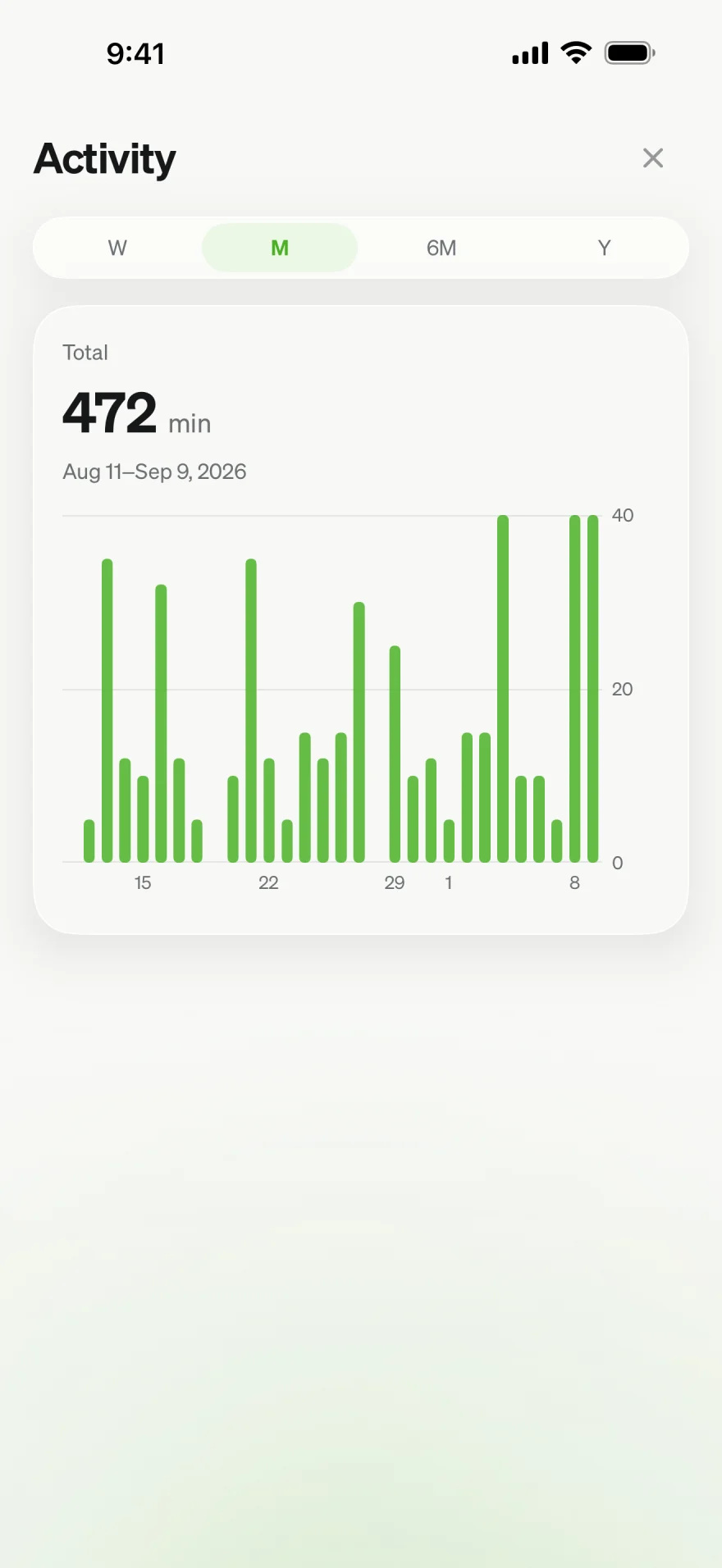
Echo records each session. Your profile shows your day streak, total minutes and number of sessions, your average session and your longest streak, and an activity chart you can switch between week, month, six months and year.